Client
Healthcare Operetor
Team
4 Designers
Focus
Strategy/Service Design
Time
3 months • 2022

01
Context & Challenge
A major HEALTHCARE OPERATOR faced rising operational costs (high loss ratio) driven by two extreme user behaviors: "Spenders" (overusing ERs for simple needs) and "Time Bombs" (neglecting basic care until hospitalization). The goal was to transform a reactive, bureaucratic model into a proactive health partnership that reduces costs while improving patient outcomes.
02
Discovery & Insights
Approach: We conducted 45+ hours of in-depth interviews with B2B decision-makers and B2C beneficiaries, combined with Desk Research and Stakeholder Workshops.
Findings: * The Trust Gap: Loyalty was tied to doctors, not the brand.
Legacy Friction: Onboarding was "stuck in 1916," relying on manual paperwork and physical letters.
Digital Skepticism: While users wanted agility, automated digital contacts were often perceived as spam or fraud.
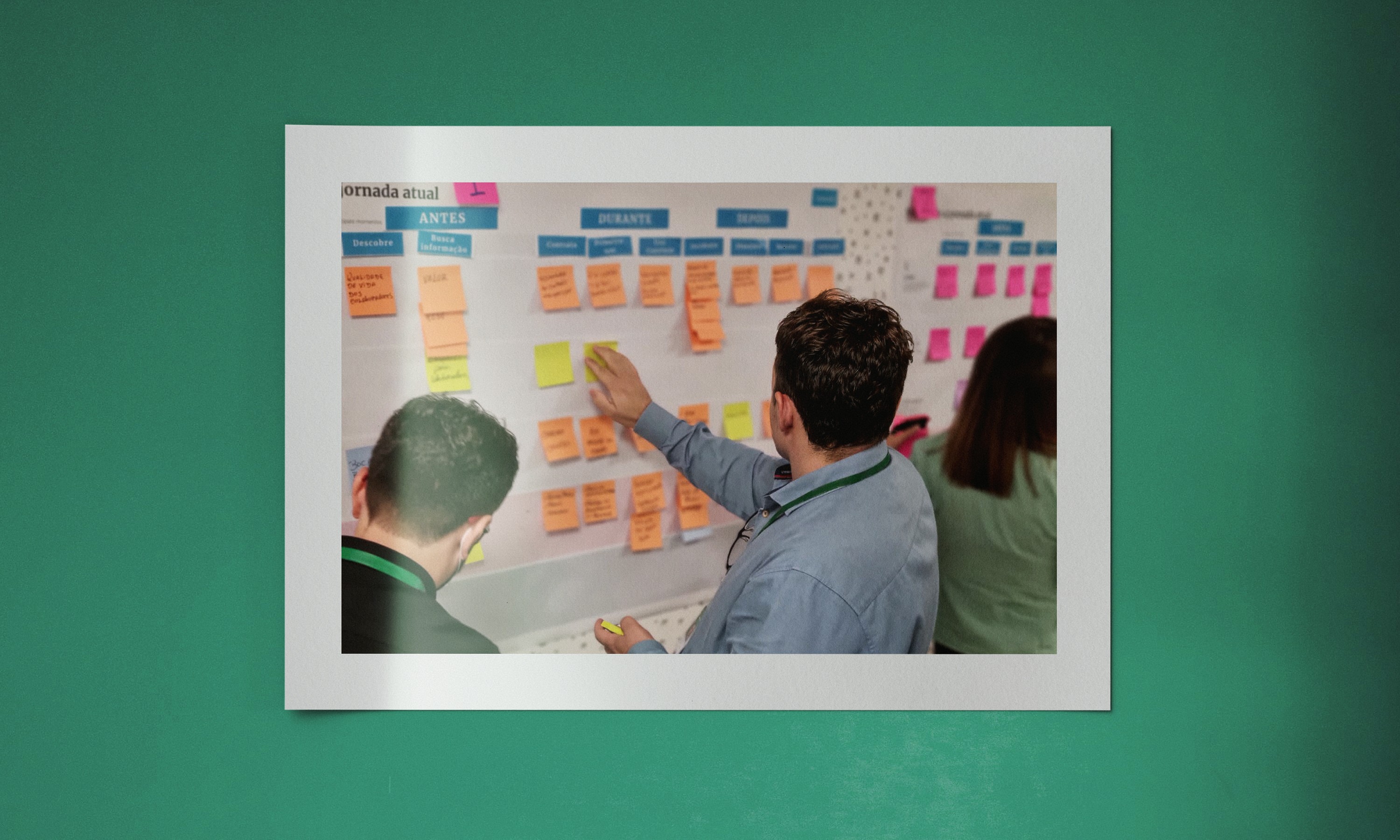
Workshop with stakeholders about the customer journey.
03
Definition & Ideation
Personas & Journeys: We mapped the Customer Journey to pinpoint friction in the current "Illness-Focused" path. The pain point was clear: the user only hears from the operator when something is wrong or for billing.
Value Generation: We translated insights into a "Continuous Care" concept. Instead of a payer, the operator becomes a "Health Partner" through a dedicated multidisciplinary squad that manages the user's health journey proproactively.
04
Delivery: Prototyping & Solution
Service Staging (The "Live" Prototype): In the second cycle, the design team staged real-time care sessions with actual clients, acting as the support squad. This "live roleplay" was crucial to validate the tone of voice and team roles.
The Pivot: Testing revealed that Nurses were initially seen as "gatekeepers" preventing access to doctors. We redesigned the Service Blueprint to position Nurses as "Flow Optimizers", ensuring agility and clinical resolution, which significantly increased user trust.
The Solution: An MVP featuring a hybrid journey: high-touch human interaction (WhatsApp/Facilitators) supported by digital tools (Telemedicine).

Workshop with stakeholders about the customer journey.
05
Outcomes & Lessons
Impact: * Validated Concept: High engagement in the first consultation, shifting brand perception from "bill payer" to "care provider."
Scalability: The model proved flexible enough to be adapted for both corporate clients and internal employees.
Business Alignment: Projected reduction in loss ratio through early preventive mapping.
Reflection: Technology is just the channel; humanized resolutivity is the real value. If doing it again, I would explore earlier integration of the billing data to automate the identification of high-risk "Time Bomb" profiles even faster.

Workshop on prioritizing solutions.